

[Oct-2021] MS-101 Dumps Full Questions - Microsoft 365 Exam Study Guide
Exam Questions and Answers for MS-101 Study Guide
NEW QUESTION 60
Your company has a Microsoft 365 subscription that uses an Azure Directory (Azure AD0 tenant named Contoso.com. The tenant contains the users shown in the following table.
You create a relation label named Label1 that has the following configurations:
Retains content for five years.
Automatically deletes all content that is older than five years.
You turn on Auto labeling for Label1 b using a policy named Policy1. Policy1 has the following configurations:
* Retains content for five years
* Automatically deletes all content that is older than five years
You turn on Auto labeling for Label 1 by using a policy named Policy1. Policy has the following configurations:
* Applies to content that contains the word Merger
* Specifies the OneDrive accounts and SharePoint sites locations
You run the following command
Set RetentionConpliancePolicy Policy1 RestrictiveRelention $true Force
Answer:
Explanation: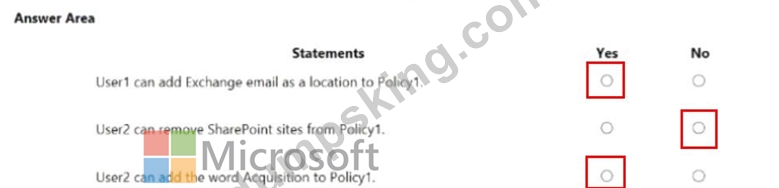
NEW QUESTION 61
You have a Microsoft Azure Active Directory (Azure AD) tenant named contoso.com.
You have three applications named App1, App2, and App3 that have the same file format.
Your company uses Windows Information Protection (WIP). WIP has the following configurations:
* Windows Information Protection mode: Silent
* Protected apps: App1
* Exempt apps: App2
From App1, you create a file named File1.
What is the effect of the configurations? To answer, select the appropriate options in the answer area.
NOTE: Each correct selection is worth one point.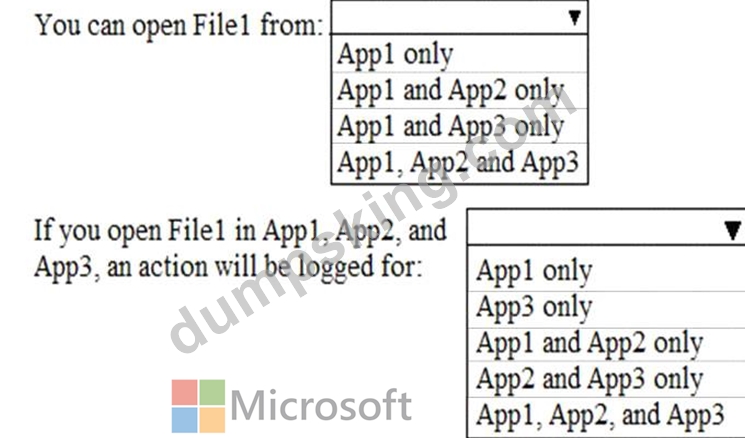
Answer:
Explanation: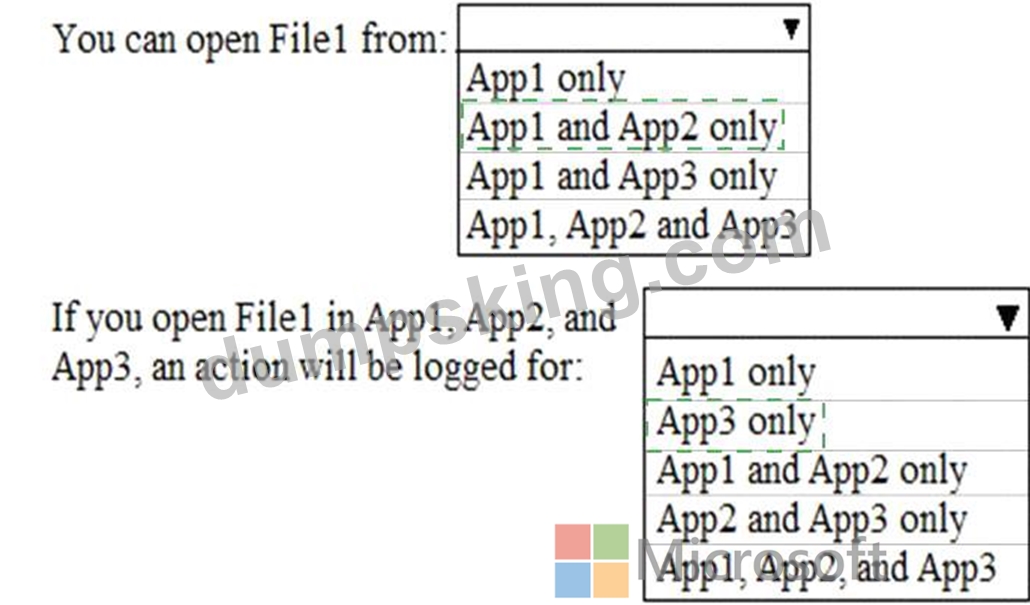
Explanation
NEW QUESTION 62
You have a Microsoft 365 tenant.
You create a retention label as shown in the Retention Label exhibit. (Click the Retention Label tab.)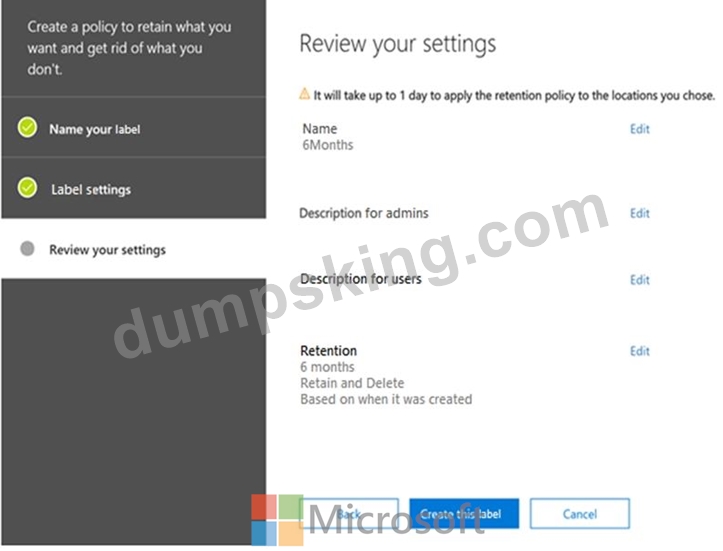
You create a label policy as shown in the Label Policy Exhibit. (Click the Label Policy tab.)
The label policy is configured as shown in the following table.
For each of the following statements, select Yes if the statement is true. Otherwise, select No.
NOTE: Each correct selection is worth one point.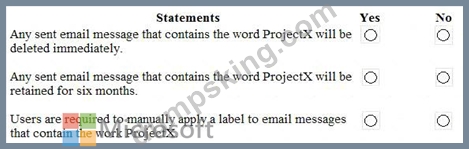
Answer:
Explanation: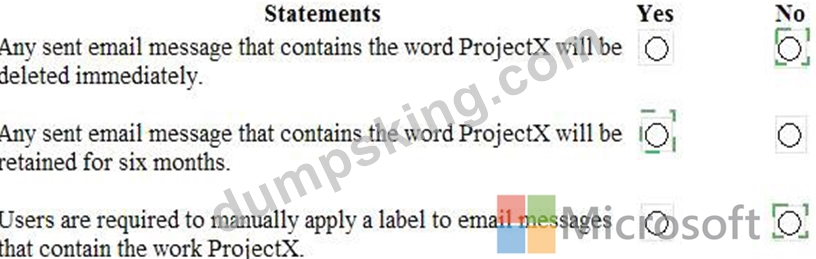
Explanation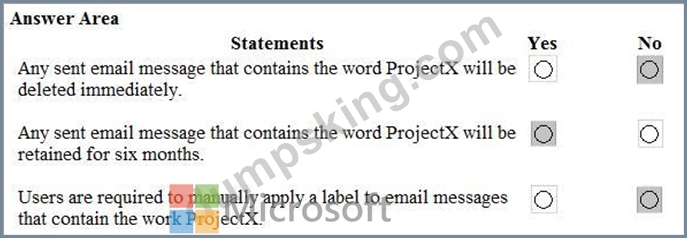
References:
https://docs.microsoft.com/en-us/office365/securitycompliance/retention-policies
NEW QUESTION 63
Your company has a Microsoft 365 subscription that uses an Azure Directory (Azure AD0 tenant named Contoso.com. The tenant contains the users shown in the following table.
You create a relation label named Label1 that has the following configurations:
Retains content for five years.
Automatically deletes all content that is older than five years.
You turn on Auto labeling for Label1 b using a policy named Policy1. Policy1 has the following configurations:
* Retains content for five years
* Automatically deletes all content that is older than five years
You turn on Auto labeling for Label 1 by using a policy named Policy1. Policy has the following configurations:
* Applies to content that contains the word Merger
* Specifies the OneDrive accounts and SharePoint sites locations
You run the following command
Set RetentionConpliancePolicy Policy1 RestrictiveRelention $true Force
For each of the following statements select Yes if the statement is true Otherwise, select No NOTE: Each correct selection is worth one point.
Answer:
Explanation: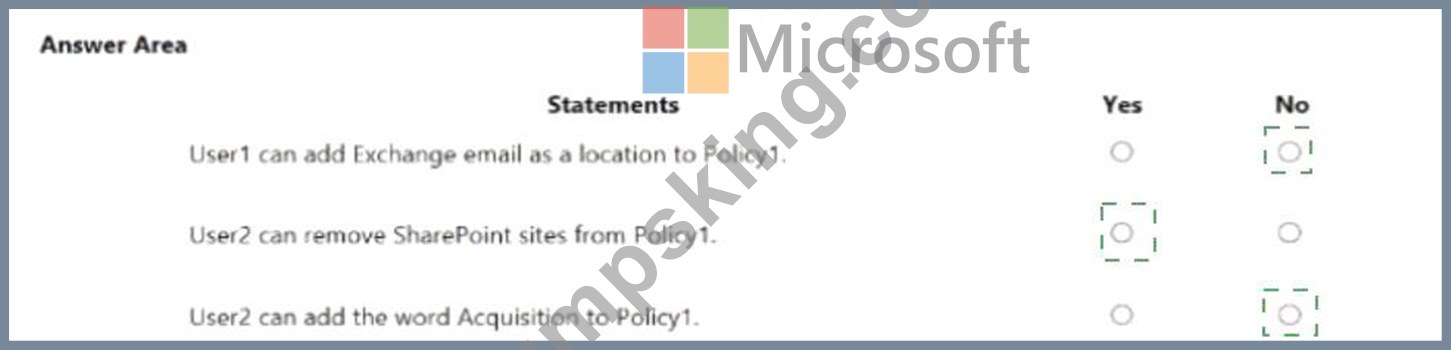
NEW QUESTION 64
You have the Microsoft Azure Active Directory (Azure AD) users shown in the following table.
Your company uses Microsoft Intune.
Several devices are enrolled in Intune as shown in the following table.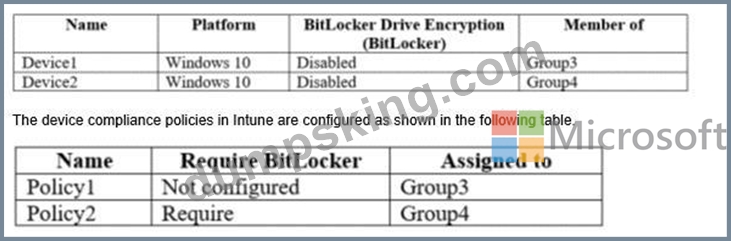
You create a conditional access policy that has the following settings:
The Assignments settings are configured as follows:
* Users and groups: Group1
* Cloud apps: Microsoft Office 365 Exchange Online
* Conditions: Include All device state, exclude Device marked as compliant Access controls is set to Block access.
For each of the following statements, select Yes if the statement is true. Otherwise, select No.
NOTE: Each correct selection is worth one point.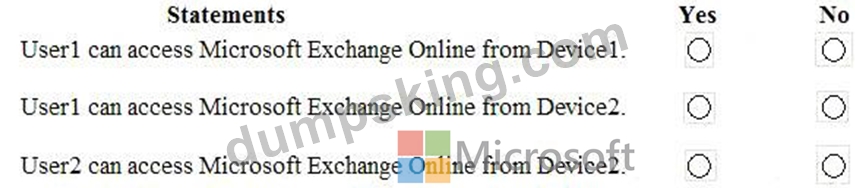
Answer:
Explanation: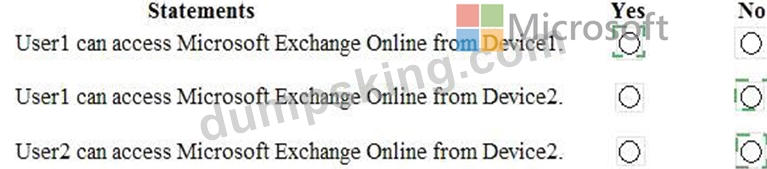
Explanation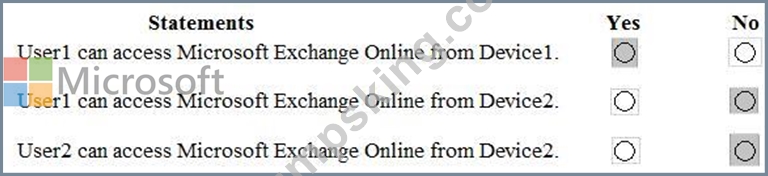
NEW QUESTION 65
You have a Microsoft 365 subscription.
You have the devices shown in the following table.
You need to onboard the devices to Windows Defender Advanced Threat Protection (ATP). The solution must avoid installing software on the devices whenever possible.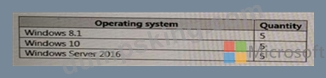
Which on boarding method should you use for each operating system? To answer, drag the appropriate methods to the correct operating systems, Each method may be used once, more than once, or not at all. You may need to drag the split bar between panes or scroll to view content NOTE: Each correct selection is worth one point.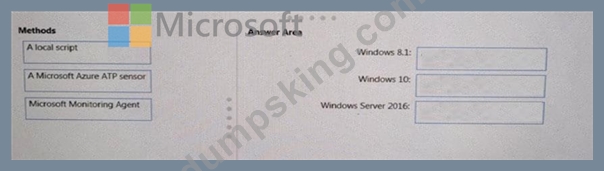
Answer:
Explanation: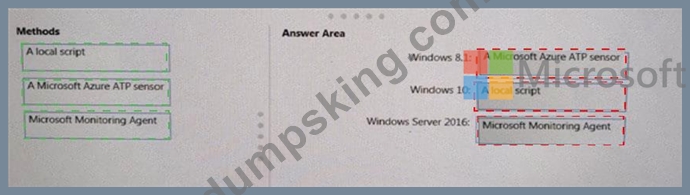
Explanation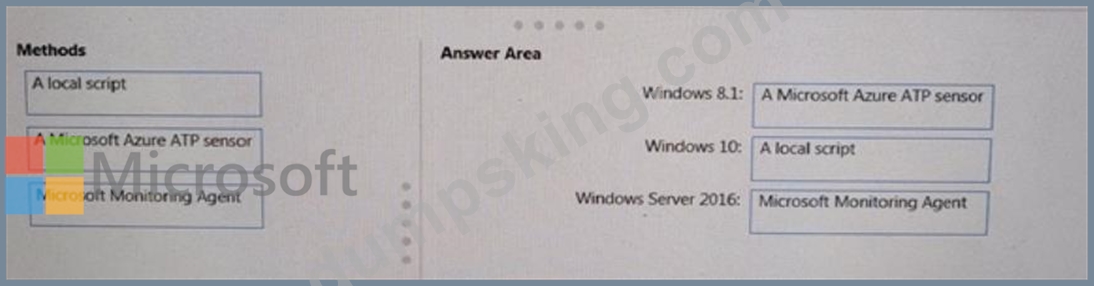
NEW QUESTION 66
Your network contains an Active Directory domain named contoso.com that uses Microsoft System Center Configuration Manager (Current Branch).
You have Windows 10 and Windows 8.1 devices.
You need to ensure that you can analyze the upgrade readiness of all the Windows 8.1 devices and analyze the update compliance of all the Windows 10 devices.
What should you do? To answer, select the appropriate options in the answer area.
NOTE: Each correct selection is worth one point.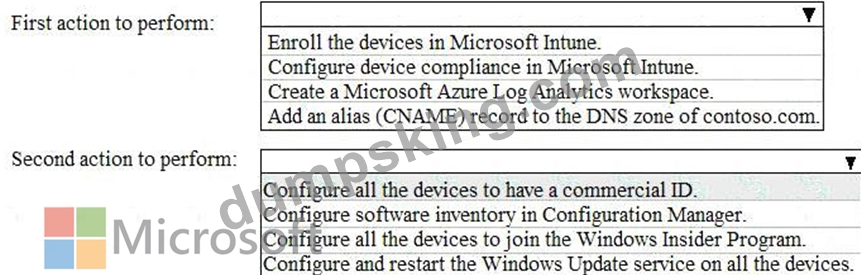
Answer:
Explanation:
Explanation
References:
https://docs.microsoft.com/en-us/windows/deployment/upgrade/upgrade-readiness-get-started
https://docs.microsoft.com/en-us/windows/deployment/update/update-compliance-get-started
NEW QUESTION 67
You configure a data loss prevention (DLP) policy named DLP1 as shown in the following exhibit.
Use the drop-down menus to select the answer choice that completes each statement based on the information presented in the graphic.
NOTE: Each correct selection is worth one point.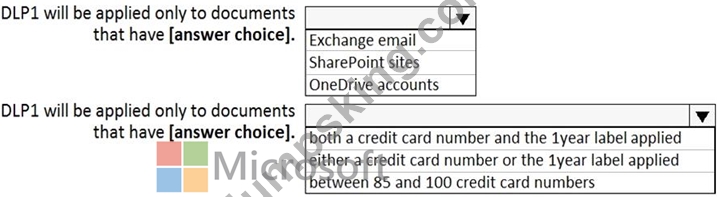
Answer:
Explanation: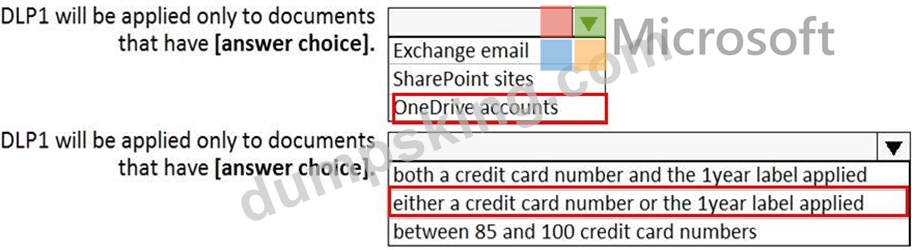
Reference:
https://docs.microsoft.com/en-us/microsoft-365/compliance/data-loss-prevention-policies?view=o365-worldwide
NEW QUESTION 68
You have a data loss prevention (DIP) policy.
You need to increase the likelihood that the DLP policy will apply to data that contains medical terms from the International Classification of Diseases (ICD-9-CM). The solution must minimize the number of false positives.
Which two settings should you modify? To answer, select the appropriate settings in the answer area.
NOTE: Each correct selection is worth one point.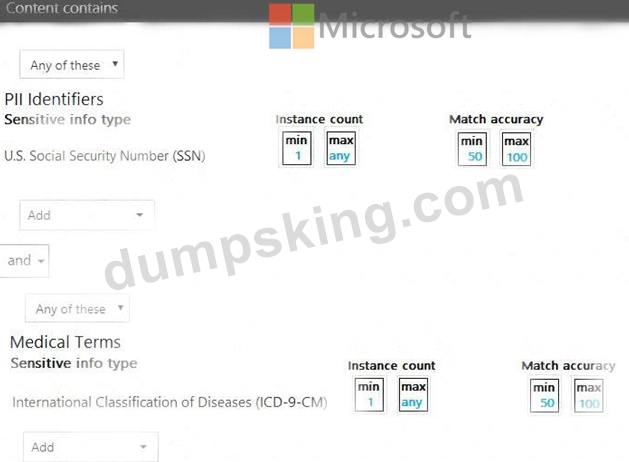
Answer:
Explanation: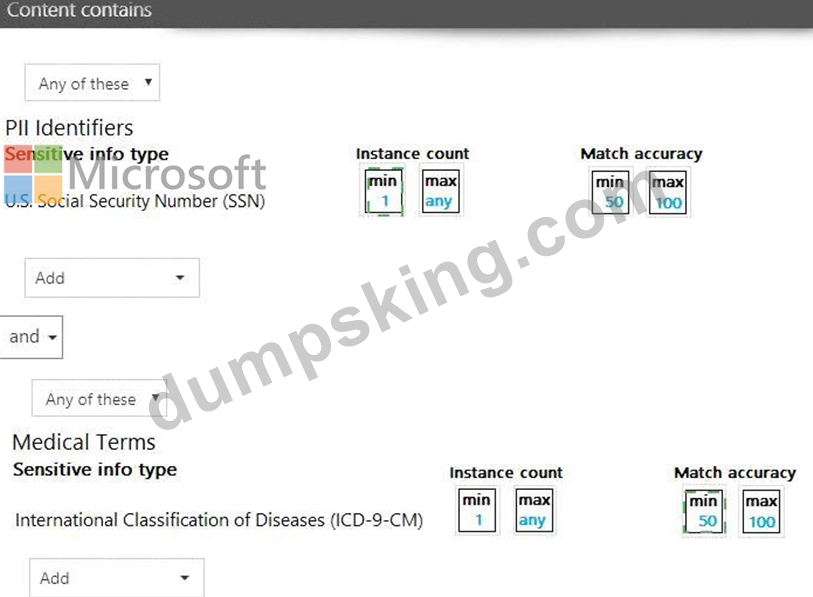
Explanation
References:
https://docs.microsoft.com/en-us/office365/securitycompliance/data-loss-prevention-policies
https://docs.microsoft.com/en-us/office365/securitycompliance/what-the-sensitive-information-types-look-for#in
NEW QUESTION 69
HOTSPOT
You have the Microsoft Azure Active Directory (Azure AD) users shown in the following table.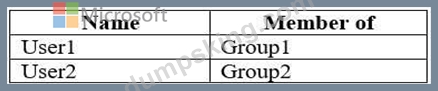
Your company uses Microsoft Intune.
Several devices are enrolled in Intune as shown in the following table.
The device compliance policies in Intune are configured as shown in the following table.
You create a conditional access policy that has the following settings:
* The Assignments settings are configured as follows:
1. Users and groups: Group1
2. Cloud apps: Microsoft Office 365 Exchange Online
3. Conditions: Include All device state, exclude Device marked as compliant
* Access controls is set to Block access.
For each of the following statements, select Yes if the statement is true. Otherwise, select No.
NOTE: Each correct selection is worth one point.
Hot Area: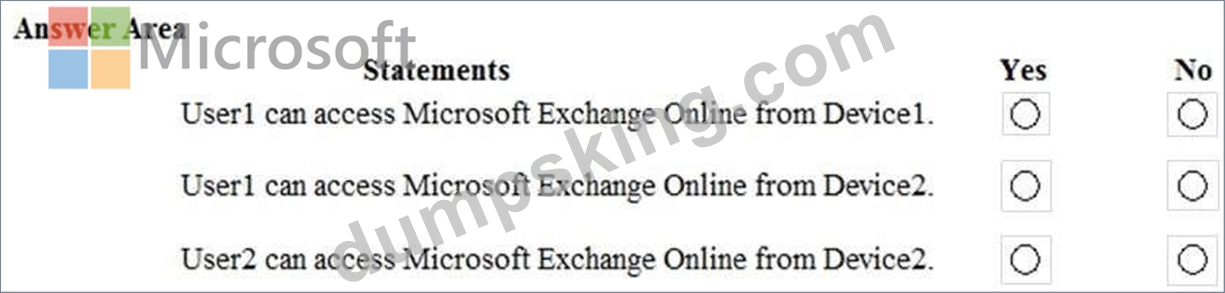
Answer:
Explanation: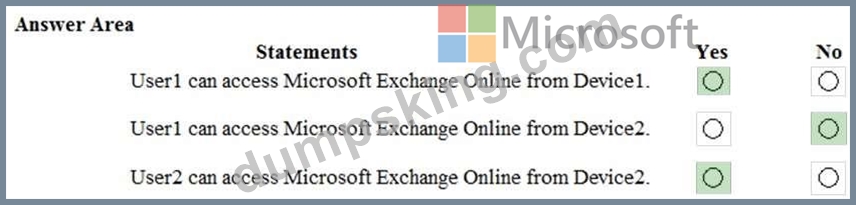
Section: [none]
Explanation:
Box 1: Yes.
User1 is in Group1. The Conditional Access Policy applies to Group1. The Conditional Access Policy blocks access unless the device is marked as compliant.
BitLocker is disabled for Device1. Device1 is in Group3 which is assigned device Policy1. The BitLocker policy in Policy1 is not configured so BitLocker is not required.
Therefore, Device1 is compliant so User1 can access Exchange online from Device1.
Box 2: No.
User1 is in Group1. The Conditional Access Policy applies to Group1. The Conditional Access Policy blocks access unless the device is marked as compliant.
BitLocker is disabled for Device2. Device2 is in Group4 which is assigned device Policy2. The BitLocker policy in Policy2 is Required so BitLocker is required.
Therefore, Device2 is not compliant so User1 cannot access Exchange online from Device2.
Box3: Yes.
User2 is in Group2. The Conditional Access Policy applies to Group1. The Conditional Access Policy does not apply to Group2. So even though Device2 is non-compliant, User2 can access Exchange Online using Device2 because there is no Conditional Access Policy preventing him/her from doing so.
Reference:
https://docs.microsoft.com/en-us/azure/active-directory/conditional-access/conditions
NEW QUESTION 70
HOTSPOT
You have three devices enrolled in Microsoft Endpoint Manager as shown in the following table.
The device compliance policies in Endpoint Manager are configured as shown in the following table.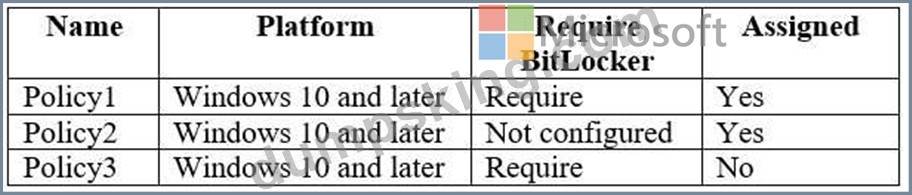
The device compliance policies have the assignments shown in the following table.
For each of the following statements, select Yes if the statement is true. Otherwise, select No.
NOTE: Each correct selection is worth one point.
Hot Area: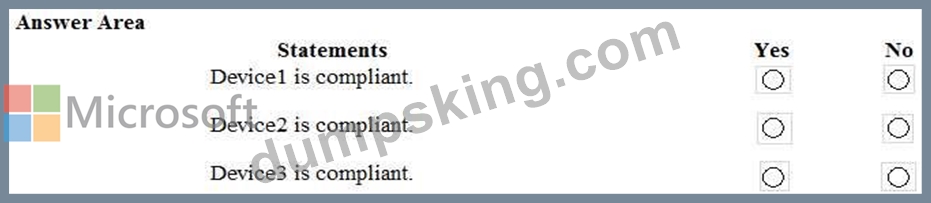
Answer:
Explanation:
Section: [none]
NEW QUESTION 71
You have a Microsoft 365 subscription that contains all the user data.
You plan to create the retention policy shown in the Locations exhibit. (Click the Locations tab.)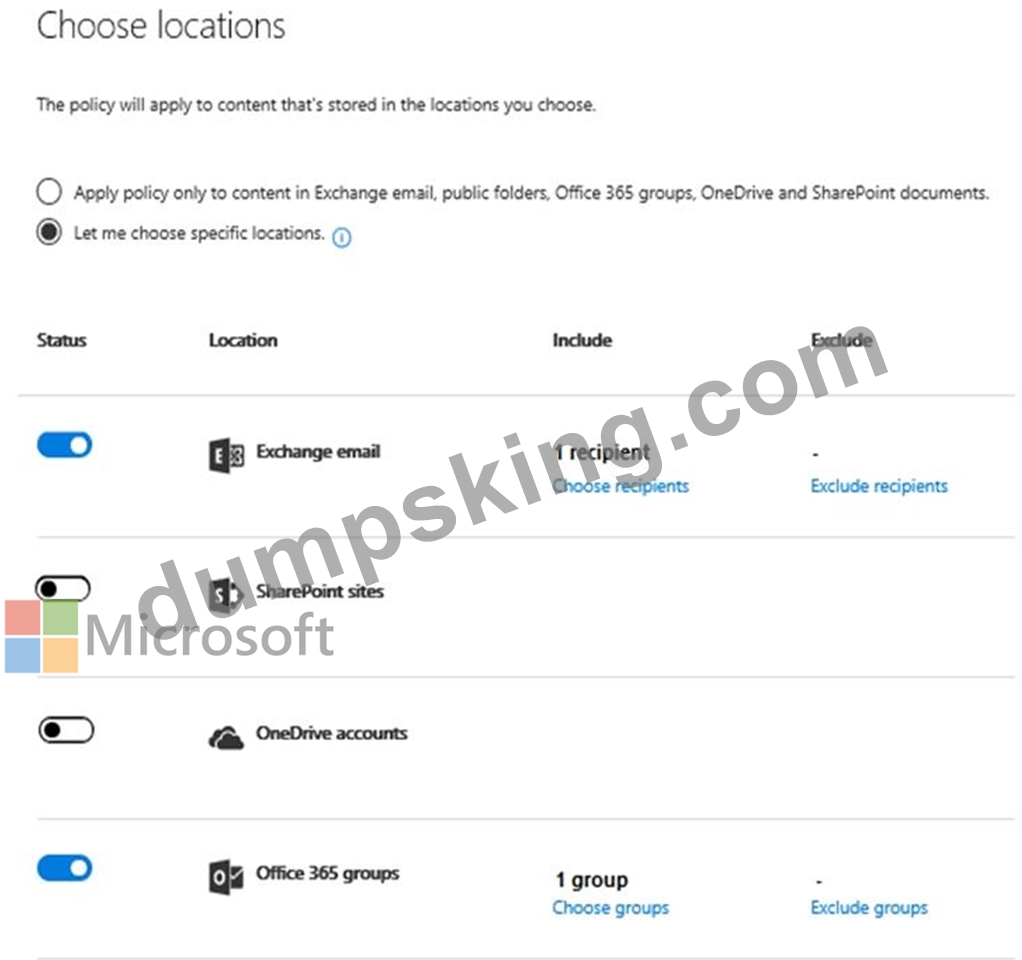
You configure the Advanced retention settings as shown in the Retention exhibit. (Click the Retention tab.)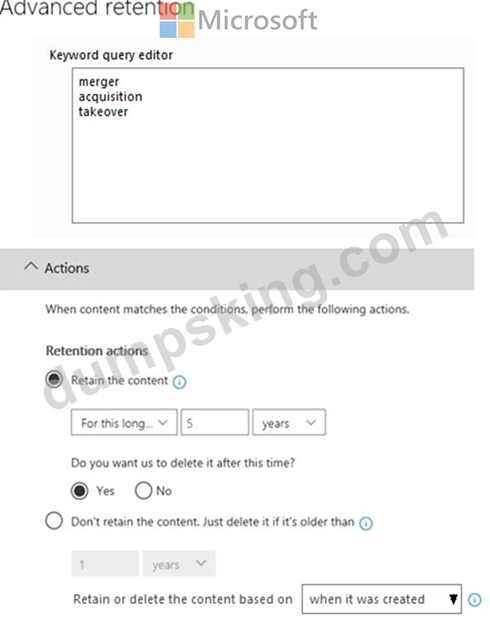
The locations specified in the policy include the groups shown in the following table.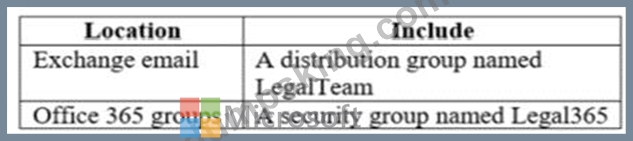
For each of the following statements, select Yes if the statement is true. Otherwise, select No.
NOTE: Each correct selection is worth one point.
Answer:
Explanation: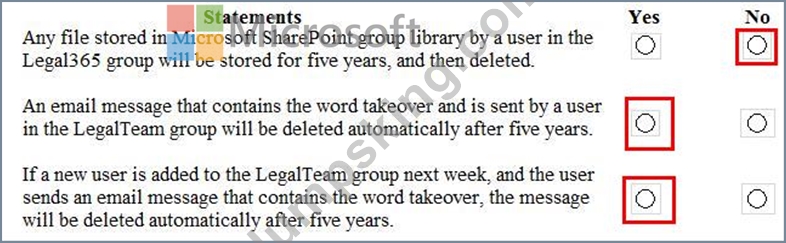
Explanation:
References:
https://docs.microsoft.com/en-us/office365/securitycompliance/retention-policies
NEW QUESTION 72
You have several devices enrolled in Microsoft Intune.
You have a Microsoft Azure Active Directory (Azure AD) tenant that includes the users shown in the following table.
The device type restrictions in Intune are configured as shown in the following table.
You add User3 as a device enrollment manager in Intune.
For each of the following statements, select Yes if the statement is true. Otherwise, select No.
NOTE: Each correct selection is worth one point.
Answer:
Explanation: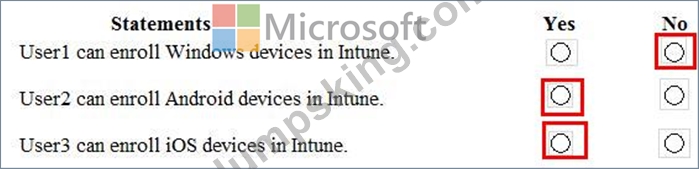
NEW QUESTION 73
Your network contains an Active Directory forest named contoso.com that is synced to Microsoft Azure Active Directory (Azure AD).
You use Microsoft System Center Configuration Manager (Current Branch) for device management.
You have the Windows 10 devices shown in the following table.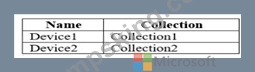
You configure Configuration Manager co-management as follows:
Automatic enrollment in Intune: Pilot
Pilot collection: Collection2
You configure co-management workloads as shown in the following exhibit.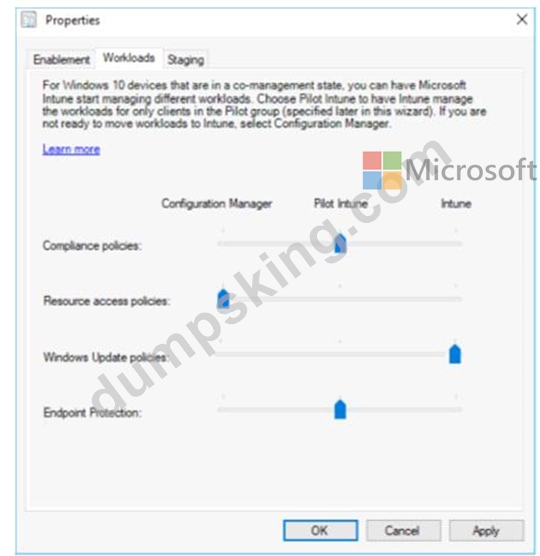
For each of the following statements, select Yes if the statement is true. Otherwise, select No.
NOTE: Each correct selection is worth one point.
Answer:
Explanation:
NEW QUESTION 74
You need to meet the technical requirements and planned changes for Intune.
What should you do? To answer, select the appropriate options in the answer area.
NOTE: Each correct selection is worth one point.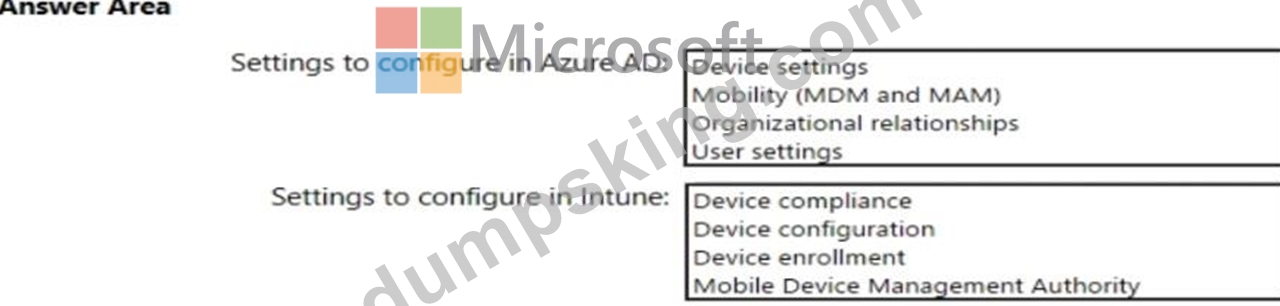
Answer:
Explanation: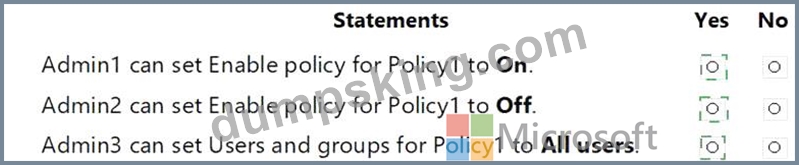
Explanation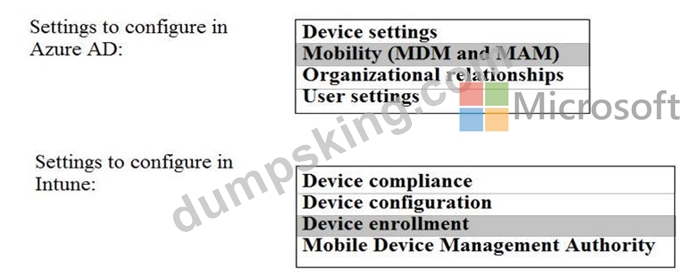
Reference:
https://docs.microsoft.com/en-us/intune/windows-enroll
NEW QUESTION 75
Note: This question is part of a series of questions that present the same scenario. Each question in the series contains a unique solution that might meet the stated goals. Some question sets might have more than one correct solution, while others might not have a correct solution.
After you answer a question in this section, you will NOT be able to return to it. As a result, these questions will not appear in the review screen.
Your network contains an Active Directory domain named contoso.com that is synced to Microsoft Azure Active Directory (Azure AD).
You manage Windows 10 devices by using Microsoft System Center Configuration Manager (Current Branch).
You configure pilot co-management.
You add a new device named Device1 to the domain. You install the Configuration Manager client on Device1.
You need to ensure that you can manage Device1 by using Microsoft Intune and Configuration Manager.
Solution: Define a Configuration Manager device collection as the pilot collection. Add Device1 to the collection.
Does this meet the goal?
- A. No
- B. Yes
Answer: B
Explanation:
Section: [none]
Explanation/Reference:
https://docs.microsoft.com/en-us/mem/configmgr/comanage/tutorial-co-manage-clients
NEW QUESTION 76
You have a Microsoft 365 tenant.
You plan to create a retention policy as shown in the following exhibit.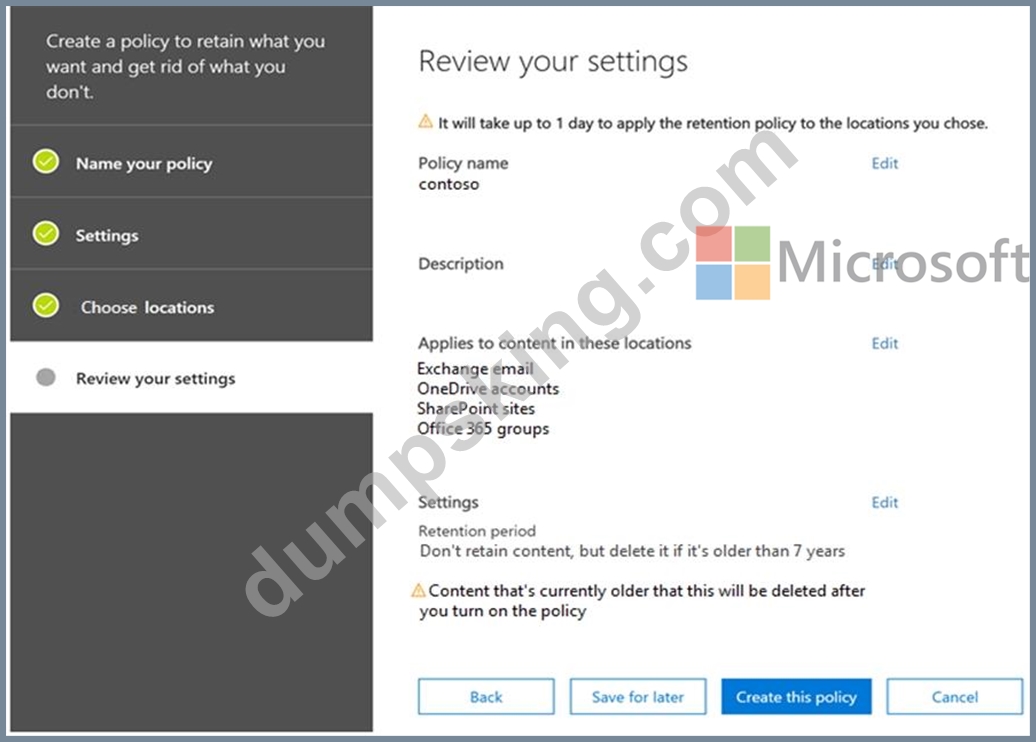
Use the drop-down menus to select the answer choice that completes each statement based on the information presented in the graphic.
NOTE: Each correct selection is worth one point.
Answer:
Explanation:
Explanation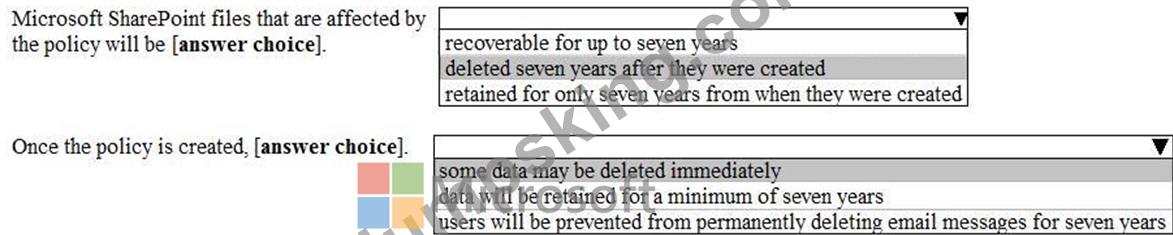
NEW QUESTION 77
......
Microsoft 365 Mobility and Security Free Update With 100% Exam Passing Guarantee: https://www.dumpsking.com/MS-101-testking-dumps.html
Real Exam Questions & Answers - Microsoft MS-101 Dump is Ready: https://drive.google.com/open?id=1cZSjK6hSdJg9aaWh8iXZByg7Dksi64Sy
