


CCDV-F exam has never been considered as something easy to pass, the preparing procedures of these exams are complicated and time-consuming, and the enrollment fee is a little high. We are afraid that working hard without any help of CCDV-F dumps VCE may be counter-productive. Trough nearly 10 years' development, our company has been the CCDV-F pass king in this industry exams. At present, we have formed a group of professional Anthropic engineers and educators who put a great energy into CCDV-F dumps VCE. With many years' experiences accumulated , our experts have figured out the whole exam procedures and can accurately predict the questions of Anthropic CCDV-F exam that will be listed in the next time .To sum up, you will save a lot of energy and money to pass this CCDV-F exam with our dedicated help.

No Useful Free Refund
Our mission is to help our customers to get what they want, excellent CCDV-F dumps VCE for example .Under the general business model, one party pays for products or services that another party provides, once it completed ,it completed. But seriously taking our mission as a benchmark as CCDV-F pass king, we will provide a refund of the full amount if you fail to pass your examination with our CCDV-F dumps VCE. Be careful, you should only provide your examination report for our check.
The passing rate keeps stable with 99%
In these years, our pass rate has risen to 99% and always keeps stable as CCDV-F pass king. And our experts are still putting their energy to its limits to achieve the perfect outcome of CCDV-F latest dumps. There are too numerous successful examples to enumerate and you could see it in the bottom of our website. Maybe you are still afraid that you may fail the exam, we guarantee a full refund if it happens with our CCDV-F dumps VCE.
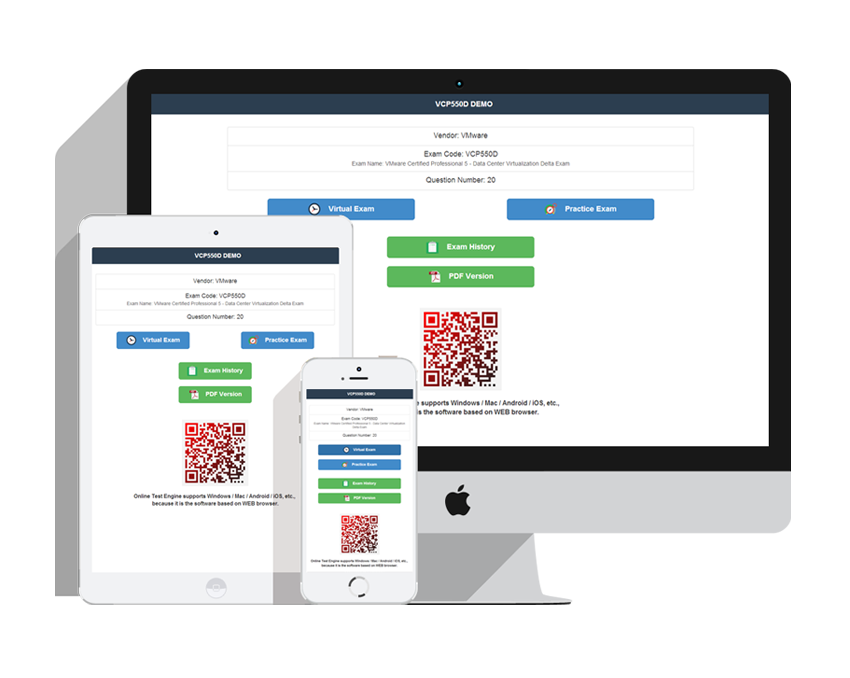
Free demo download trial
We understand that you may still hesitate to buy our CCDV-F dumps VCE; even you have realized a variety of advantages of our products. Then another favorable condition of CCDV-F dumps VCE that we can provide lies in "free trial", you will find "download for free" in our purchase website for your trial, having some recognition about our products. If Our Anthropic CCDV-F latest dumps really interests you, we have confidence that we can be good partner.
After purchase, Instant Download: Upon successful payment, Our systems will automatically send the product you have purchased to your mailbox by email. (If not received within 12 hours, please contact us. Note: don't forget to check your spam.)
Preferential terms & extra discount is ready for you if you purchase more
We will provide you preferential terms if you buy a large quantity of our CCDV-F dumps VCE. For examples: you can enjoy 39% off if you choose PDF version plus PC Test Engine of CCDV-F dumps VCE (a simulation test that you can simulate an examination to check your learning progress). APP (Online Test Engine) is our advanced product which can be used in any mobile devices. The APP version of CCDV-F dumps VCE is more convenient for your exam preparation and once it is first downloaded and used, CCDV-F latest dumps can be used without Internet next time if you don't clear the cache.
One-year free updates downloading
As you know, Anthropic exam knowledge is updating quickly under the context of rapidly speeding society. After you obtain our CCDV-F dumps VCE, we will inform you once there are any changes in case of any inconveniences. And after you finish the exam, we also wish you can continue to learn the newest knowledge. So we provide CCDV-F latest dumps freely for one-year and half price for future cooperation after one-year.
Anthropic CCDV-F Exam Syllabus Topics:
| Section | Weight | Objectives |
|---|---|---|
| Topic 1: Applications and Integration | 33.1% | - Claude API and Client SDKs
|
| Topic 2: Agents and Workflows | 14.7% | - Claude Agent SDK and Agent Loops
|
| Topic 3: Eval, Testing, and Debugging | 2.6% | - Testing and Debugging
|
| Topic 4: Claude Code | 3.1% | - Claude Code Configuration and Usage
|
| Topic 5: Tools and MCPs | 10.6% | - Model Context Protocol
|
| Topic 6: Security and Safety | 8.1% | - Safety and Guardrails
|
| Topic 7: Model Selection and Optimization | 16.8% | - Performance and Cost Optimization
|
| Topic 8: Prompt and Context Engineering | 11% | - Prompt Engineering
|
Anthropic Claude Certified Developer-Foundations Sample Questions:
Question 1
You are implementing a custom tool for your Claude agent. The tool needs to interact with an external pricing service that returns product data.
Which of the following best practices would you apply as you develop this tool?
A. Omit the tool description and let the model infer when to use the tool based on the tool's name and the rest of the prompt context.
B. Define the tool with a clear schema, write a precise description for when to call it, and handle pricing service errors explicitly.
C. Implement the tool with no error handling and let the agent loop catch failures whenever the pricing service returns an error during operation.
D. Define the tool with a loose schema and let the model interpret the inputs flexibly on each call the agent makes.
Question 2
Your Claude application's content policy specifies categories of content it should not produce under any circumstance. The application currently has no mechanism to enforce this policy, and content matching these categories is appearing in the application's output.
How would you enforce the content policy?
A. Move enforcement to users by asking them to report content policy violations after the violating content has already reached them in the application's responses.
B. Add deterministic output filtering that checks responses against the content policy before they reach users.
C. Remove the content policy entirely and let any output reach users during normal operation, accepting whatever content the application produces in response to incoming traffic.
D. Enhance the system prompt to contain explicit instructions for the categories to avoid, complete with examples of each category. Treat the strengthened prompt as the primary enforcement mechanism for the application's content policy across all responses.
Question 3
Your Claude agent's hooks are currently triggered for every action, which slows down the agent significantly even when actions pose no risk. The team wants to scope hooks more carefully.
How would you scope the hooks?
A. Disable the agent during peak hours so the hook overhead does not slow the application down during the busiest periods of the day across the application's operation.
B. Replace hooks with system prompt instructions on the grounds that prompt instructions can produce the same enforcement effect that hooks produce on the agent's actions.
C. Disable all hooks while the team re-scopes them, treating the period of no hook enforcement as a temporary state during the re-scoping work.
D. Scope hooks to only the high-risk actions, such as destructive operations or sensitive data access, and remove hooks from low-risk actions to balance safety with performance.
Question 4
A team has deployed a multi-agent system in which a primary agent decomposes user requests and delegates subtasks to three specialized subagents: one for data retrieval, one for analysis, and one for report generation.
In production, the team observes that subagents are making redundant tool calls, occasionally exceeding token budgets, and sometimes producing outputs that contradict each other - all of which the primary agent passes along without catching.
What is the most appropriate way to address these failures?
A. Add retry logic to each subagent so that when a tool call fails, the subagent retries automatically before escalating - and configure each subagent to log its tool calls and outputs to a shared trace so the team can audit redundancy and contradictions after the fact.
B. Strengthen the primary agent's management layer to enforce per-subagent tool budgets, validate outputs against a defined schema before passing them forward, and establish explicit handoff contracts between stages.
C. Collapse the three subagents into a single large-context model call that handles retrieval, analysis, and generation in one pass.
D. Give each subagent read access to the other subagents' outputs so they can identify and resolve contradictions without routing back through the primary agent.
Question 5
Your Claude application has been running for several conversation turns, and you notice the model occasionally references information that was discussed many turns ago but is no longer relevant. You suspect context drift is causing the model to weight stale content too heavily.
How would you address the drift?
A. Truncate the conversation so the model sees only the most recent turn during each subsequent response.
B. Increase the context window size so all turns of the conversation remain visible to the model in full detail.
C. Apply compaction to summarize older portions of the conversation so the gist remains while the specifics carry less weight.
D. Reset the conversation after every turn so the model loses all prior turns when generating a response.
Solutions:
| Question 1 Answer: B | Question 2 Answer: B | Question 3 Answer: D | Question 4 Answer: B | Question 5 Answer: C |


 0 Customer Reviews


