


The passing rate keeps stable with 99%
In these years, our pass rate has risen to 99% and always keeps stable as SPS-C01 pass king. And our experts are still putting their energy to its limits to achieve the perfect outcome of SPS-C01 latest dumps. There are too numerous successful examples to enumerate and you could see it in the bottom of our website. Maybe you are still afraid that you may fail the exam, we guarantee a full refund if it happens with our SPS-C01 dumps VCE.
Free demo download trial
We understand that you may still hesitate to buy our SPS-C01 dumps VCE; even you have realized a variety of advantages of our products. Then another favorable condition of SPS-C01 dumps VCE that we can provide lies in "free trial", you will find "download for free" in our purchase website for your trial, having some recognition about our products. If Our Snowflake SPS-C01 latest dumps really interests you, we have confidence that we can be good partner.
After purchase, Instant Download: Upon successful payment, Our systems will automatically send the product you have purchased to your mailbox by email. (If not received within 12 hours, please contact us. Note: don't forget to check your spam.)
One-year free updates downloading
As you know, Snowflake exam knowledge is updating quickly under the context of rapidly speeding society. After you obtain our SPS-C01 dumps VCE, we will inform you once there are any changes in case of any inconveniences. And after you finish the exam, we also wish you can continue to learn the newest knowledge. So we provide SPS-C01 latest dumps freely for one-year and half price for future cooperation after one-year.
No Useful Free Refund
Our mission is to help our customers to get what they want, excellent SPS-C01 dumps VCE for example .Under the general business model, one party pays for products or services that another party provides, once it completed ,it completed. But seriously taking our mission as a benchmark as SPS-C01 pass king, we will provide a refund of the full amount if you fail to pass your examination with our SPS-C01 dumps VCE. Be careful, you should only provide your examination report for our check.
SPS-C01 exam has never been considered as something easy to pass, the preparing procedures of these exams are complicated and time-consuming, and the enrollment fee is a little high. We are afraid that working hard without any help of SPS-C01 dumps VCE may be counter-productive. Trough nearly 10 years' development, our company has been the SPS-C01 pass king in this industry exams. At present, we have formed a group of professional Snowflake engineers and educators who put a great energy into SPS-C01 dumps VCE. With many years' experiences accumulated , our experts have figured out the whole exam procedures and can accurately predict the questions of Snowflake SPS-C01 exam that will be listed in the next time .To sum up, you will save a lot of energy and money to pass this SPS-C01 exam with our dedicated help.

Preferential terms & extra discount is ready for you if you purchase more
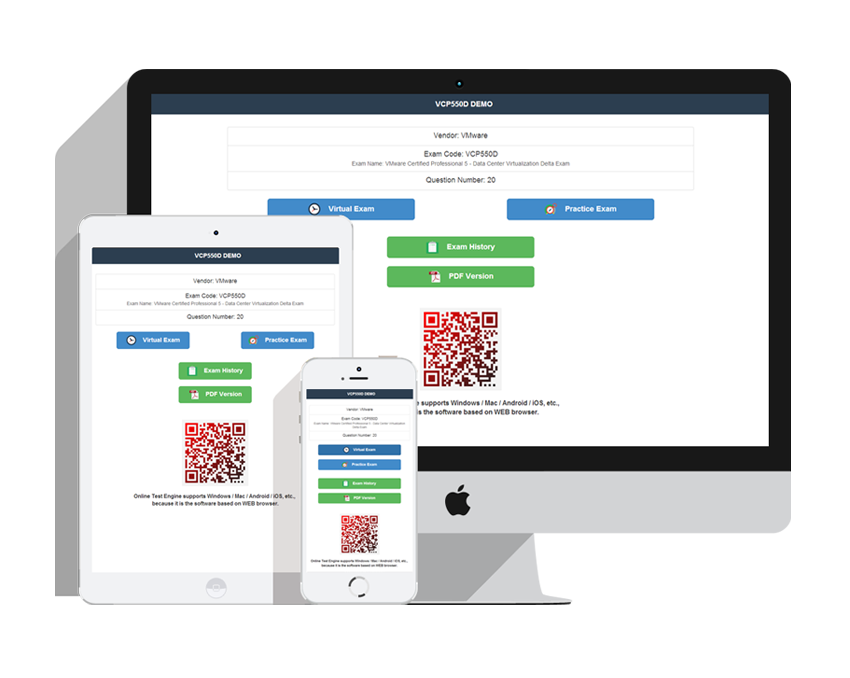
We will provide you preferential terms if you buy a large quantity of our SPS-C01 dumps VCE. For examples: you can enjoy 39% off if you choose PDF version plus PC Test Engine of SPS-C01 dumps VCE (a simulation test that you can simulate an examination to check your learning progress). APP (Online Test Engine) is our advanced product which can be used in any mobile devices. The APP version of SPS-C01 dumps VCE is more convenient for your exam preparation and once it is first downloaded and used, SPS-C01 latest dumps can be used without Internet next time if you don't clear the cache.
Snowflake Certified SnowPro Specialty - Snowpark Sample Questions:
1. You are working with a Snowpark DataFrame called 'customer df that contains customer data, including a column named 'registration_date' of data type TIMESTAMP NTZ. You need to filter the DataFrame to only include customers who registered in the year 2023. Which of the following Snowpark code snippets represents the MOST efficient and correct way to accomplish this filtering, considering potential timezone issues?
A) 
B) 
C) 
D) 
E) 
2. You are developing a Snowpark application to analyze website traffic data'. You have a DataFrame named 'website_logs' with columns 'user_id', 'page_url', and 'timestamp'. You need to create a new DataFrame that contains the count of distinct users who visited each page within a specific time window Consider the following (incomplete) Snowpark Python code:
Which of the following code lines, when inserted into the Complete the following line...' comment, will correctly calculate the approximate distinct user count for each page within the specified time window?
A) website_logs.groupBy('page_url', F.window('timestamp', '1 hour')).agg(F.countDistinct('user_id').alias('distinct_users'))
B) website_logs.groupBy('page_url').agg(F.countDistinct('user_id').alias('distinct_users'))
C) website_logs.with_column('distinct_users', F.approx_count_distinct('user_id').over(window_spec))
D) website_logs.with_column('distinct_users', F.count('user_id').over(window_spec))
E) _logs.with_column('distinct_users', F.countDistinct('user_id').over(window_spec)) website
3. You have a Snowflake table containing JSON data with nested arrays and objects representing website user interactions. You want to extract all 'product_id' values from within an array named 'viewed _ products' nested inside a 'session' object for each event, using Snowpark for Python. Assume the 'raw_events' table has a variant column called 'event_data". Which of the following Snowpark code snippets will correctly extract and flatten the 'product_id' values into a DataFrame?
A) 
B) 
C) 
D) 
E) 
4. You are tasked with optimizing a Snowpark Python application that performs complex data transformations on a large dataset. The application is running slower than expected, and you suspect that data serialization and transfer between the Snowpark client and the Snowflake engine are bottlenecks. Which of the following strategies could you implement to improve performance? (Select all that apply.)
A) Convert all dataframes to Pandas dataframes locally and perform data manipulation with Pandas methods to take advantage of local resources.
B) Minimize the amount of data transferred between the client and the engine by pushing down as much computation as possible to Snowflake using Snowpark DataFrame operations.
C) Create and utilize temporary tables within Snowflake to store intermediate results of complex transformations.
D) Utilize smaller batch sizes when writing data back to Snowflake to reduce memory pressure on the client.
E) Increase the configuration parameter to maximize parallelism within the Snowpark engine without considering resources or potential bottleneck.
5. A data engineering team is developing a Snowpark stored procedure in Python to perform anomaly detection on time-series data stored in a Snowflake table named 'sensor_readingS. The stored procedure needs to efficiently process large volumes of data and return only the rows identified as anomalies. Which of the following approaches would provide the most performant and scalable solution for operationalizing this stored procedure?
A) Load the entire 'sensor_readings' table into a Pandas DataFrame within the stored procedure, perform anomaly detection using a Python library like 'scikit-learn' , and then create a Snowpark DataFrame from the filtered Pandas DataFrame to return the results.
B) Create a UDF with a Scala implementation and use it inside the Snowpark stored procedure to detect anomalies using the Scala implementation for increased processing power.
C) Use the Snowpark API to directly perform anomaly detection calculations (e.g., rolling statistics, z-score calculations) on the 'sensor_readings' table within the stored procedure, leveraging Snowpark's distributed processing capabilities, and then return the resulting Snowpark DataFrame containing only the anomalies.
D) Use the method to include a pre-trained anomaly detection model (pickled object) in the stored procedure's execution environment. Load the model, use it to predict on the data fetched using 'session.table(Y , and return a Snowpark DataFrame of anomalies.
E) Execute a SQL query from within the stored procedure using the Snowflake connector for Python to fetch the relevant data, then use a standard Python loop to iterate through the results and apply anomaly detection logic. Return the anomalous rows as a list of dictionaries.
Solutions:
| Question # 1 Answer: B | Question # 2 Answer: C | Question # 3 Answer: C | Question # 4 Answer: B,C,D | Question # 5 Answer: C |


 710 Customer Reviews


