


The passing rate keeps stable with 99%
In these years, our pass rate has risen to 99% and always keeps stable as OGEA-102 pass king. And our experts are still putting their energy to its limits to achieve the perfect outcome of OGEA-102 latest dumps. There are too numerous successful examples to enumerate and you could see it in the bottom of our website. Maybe you are still afraid that you may fail the exam, we guarantee a full refund if it happens with our OGEA-102 dumps VCE.
No Useful Free Refund
Our mission is to help our customers to get what they want, excellent OGEA-102 dumps VCE for example .Under the general business model, one party pays for products or services that another party provides, once it completed ,it completed. But seriously taking our mission as a benchmark as OGEA-102 pass king, we will provide a refund of the full amount if you fail to pass your examination with our OGEA-102 dumps VCE. Be careful, you should only provide your examination report for our check.
Free demo download trial
We understand that you may still hesitate to buy our OGEA-102 dumps VCE; even you have realized a variety of advantages of our products. Then another favorable condition of OGEA-102 dumps VCE that we can provide lies in "free trial", you will find "download for free" in our purchase website for your trial, having some recognition about our products. If Our The Open Group OGEA-102 latest dumps really interests you, we have confidence that we can be good partner.
After purchase, Instant Download: Upon successful payment, Our systems will automatically send the product you have purchased to your mailbox by email. (If not received within 12 hours, please contact us. Note: don't forget to check your spam.)
One-year free updates downloading
As you know, The Open Group exam knowledge is updating quickly under the context of rapidly speeding society. After you obtain our OGEA-102 dumps VCE, we will inform you once there are any changes in case of any inconveniences. And after you finish the exam, we also wish you can continue to learn the newest knowledge. So we provide OGEA-102 latest dumps freely for one-year and half price for future cooperation after one-year.
Preferential terms & extra discount is ready for you if you purchase more
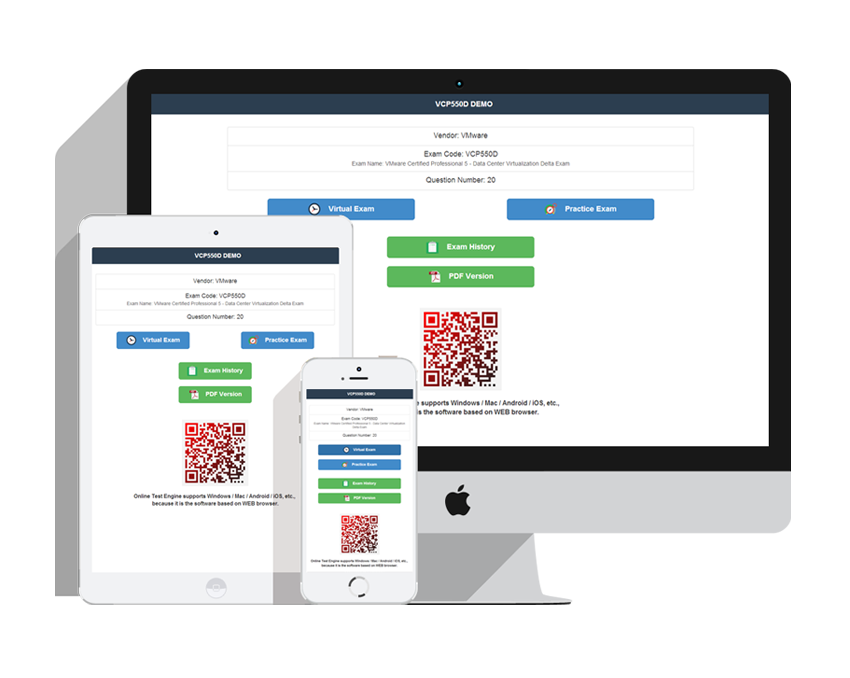
We will provide you preferential terms if you buy a large quantity of our OGEA-102 dumps VCE. For examples: you can enjoy 39% off if you choose PDF version plus PC Test Engine of OGEA-102 dumps VCE (a simulation test that you can simulate an examination to check your learning progress). APP (Online Test Engine) is our advanced product which can be used in any mobile devices. The APP version of OGEA-102 dumps VCE is more convenient for your exam preparation and once it is first downloaded and used, OGEA-102 latest dumps can be used without Internet next time if you don't clear the cache.
OGEA-102 exam has never been considered as something easy to pass, the preparing procedures of these exams are complicated and time-consuming, and the enrollment fee is a little high. We are afraid that working hard without any help of OGEA-102 dumps VCE may be counter-productive. Trough nearly 10 years' development, our company has been the OGEA-102 pass king in this industry exams. At present, we have formed a group of professional The Open Group engineers and educators who put a great energy into OGEA-102 dumps VCE. With many years' experiences accumulated , our experts have figured out the whole exam procedures and can accurately predict the questions of The Open Group OGEA-102 exam that will be listed in the next time .To sum up, you will save a lot of energy and money to pass this OGEA-102 exam with our dedicated help.

The Open Group OGEA-102 Exam Syllabus Topics:
| Section | Objectives |
|---|---|
| Topic 1: Supporting ADM Work | |
| Topic 2: Architecture Development | - Phase E, F, G (Implementation) - Phase H (Change Management) - Phase A (Starting Point) - Requirements Management - Phase B, C, D (Architecture Domains) |
| Topic 3: Context for Enterprise Architecture | - Stakeholder Management |
The Open Group TOGAF Enterprise Architecture Part 2 Sample Questions:
Question 1
Please read this scenario prior to answering the question
Your role is consultant to the Lead Architect within a multinational company that manufactures electronic components. The company has several manufacturing divisions located worldwide and a complex supply chain. After a recent study, senior management have stated a concern about business efficiency considering the company ' s multiple data centers and duplication of applications.
The company has a mature Enterprise Architecture (EA) practice and uses the TOGAF architecture development method in its EA practice. In addition to the EA program, the company has several management frameworks in use, including business planning, project/portfolio management, and operations management.
The EA program is sponsored by the CIO.
A strategic architecture has been defined to improve the ability to meet customer demand and improve management of the supply chain. The strategic architecture includes the consolidation of multiple Enterprise Resource Planning (ERP) applications that have been operating independently in the divisions ' production facilities.
Each division has completed the Architecture Definition documentation to meet its own specific manufacturing requirements. The enterprise architects have defined a set of work packages that address the gaps identified. They have identified the value produced, effort required, and dependencies between work packages to reach a farget architecture that would integrate a new ERP environment into the company.
Because of the risks posed by change from the current environment, the architects have recommended that a phased approach occurs to implement the target architecture with several transition states. The overall implementation process is estimated to take several years.
Refer to the scenario
You have been asked what the next steps are for the migration planning.
Based on the TOGAF standard which of the following is the best answer?
A. You assess how the Implementation and Migration plan impacts the other frameworks in use in the organization. Minimally, you ensure that the plan is coordinated with the business planning, project
/portfolio management and operations management frameworks. You would then assign a business value to each work package, considering available resources and strategic fit. You then use the work packages to identify projects that will be in the Implementation and Migration Plan
B. You estimate the business value for each project by applying the Business Value Assessment Technique to prioritize the implementation projects and project increments. The assessment should focus on return on investment and performance evaluation criteria that can be used to monitor the progress of the architecture transformation. You would confirm and plan a series of Transition Architecture phases using an Architecture Definition Increments Table that lists the projects.
C. You place the Architecture Definition Document under configuration control. This will ensure that the architecture remains relevant and responsive to the needs of the enterprise. You would identify the development resources to undertake the projects. You would then produce an Implementation Governance Model to manage the lessons learned prior to finalizing the plan. You recommend that lessons learned be applied as changes to the architecture without review.
D. You conduct a series of Compliance Assessments to ensure that the architecture is being implemented according to the contract. The Compliance Assessment should verify that the implementation team is using the proper development methodology. It should include deployment of monitoring tools and ensure that performance targets are being met. If they are not met, then you would identify changes to performance requirements and update those in the Implementation and Migration Plan.
Question 2
Please read this scenario prior to answering the question
Your role is that of a senior architect, reporting to the Chief Enterprise Architect, at a medium-sized company with 400 employees. The nature of the business is such that the data and the information stored on the company systems is their major asset and is highly confidential.
The company employees travel extensively for work and must communicate over public infrastructure using message encryption, VPNs, and other standard safeguards. The company has invested in cybersecurity awareness training for all its staff. However, it is recognized that even with good education as well as system security, there is a dependency on third-parly suppliers of infrastructure and software.
The company uses the TOGAF standard as the method and guiding framework for its Enterprise Architecture (EA) practice. The CTO is the sponsor of the activity.
The Chief Security Officer (CSO) has noted an increase in ransomware (malicious software used in ransom demands) attacks on companies with a similar profile. The CSO recognizes that no matter how much is spent on education, and support, it is likely just a matter of time before the company suffers a significant attack that could completely lock them out of their information assets.
A risk assessment has been done and the company has sought cyber insurance that includes ransomware coverage. The quotation for this insurance is hugely expensive. The CTO has recently read a survey that stated that one in four organizations paying ransoms were still unable to recover their data, while nearly as many were able to recover the data without paying a ransom. The CTO has concluded that taking out cyber insurance in case they need to pay a ransom is not an option.
Refer to the scenario
You have been asked to describe the steps you would take to improve the resilience of the current architecture?
Based on the TOGAF standard which of the following is the best answer?
A. You would ensure that the company has in place up-to-date processes for managing change to the current Enterprise Architecture. Based on the scope of the concerns raised you recommend that this be managed at the infrastructure level. Changes should be made to the baseline description of the Technology Architecture. The changes should be approved by the Architecture Board and implemented by change management techniques.
B. You would request an Architecture Compliance Review with the scope to examine the company ' s resilience to ransomware attacks. You would identify the departments involved and have them nominate representatives. You would then tailor checklists to address the requirement for increased resilience. You would circulate to the nominated representatives for them to complete. You would then review the completed checklists, identifying and resolving issues. You would then determine and present your recommendations.
C. You would determine business continuity requirements, and undertake a gap analysis of the current Enterprise Architecture. You would make recommendations for change requirements to address the situation and create a change request. You would manage a meeting of the Architecture Board to assess and approve the change request. Once approved you would produce a new Request for Architecture Work to activate an ADM cycle to carry out a project to define the change.
D. You would monitor for technology changes from your existing suppliers that could improve resilience.
You would prepare and run a disaster recovery planning exercise for a ransomware attack and analyze the performance of the current Enterprise Architecture. Using the findings, you would prepare a gap analysis of the current Enterprise Architecture. You would prepare change requests to address identified gaps. You would add the changes implemented to the Architecture Repository.
Question 3
Please read this scenario prior to answering the question
You are working as an Enterprise Architect at a large supermarket. The company runs many retail stores, as well as an online grocery shop. Many of the stores used to remain open 24/7, but the number has decreased in recent years. Instead, they now focus on fulfilling online orders during the night.
The company has a mature Enterprise Architecture (EA) practice and uses the TOGAF standard for its architecture development method. The EA practice is involved in all aspects of the business, with oversight provided by an Architecture Board with representatives from different parts of the business. The EA program is sponsored by the Chief Information Officer (CIO).
Each store uses a standard method to track sales and inventory. This involves sending accurate timely sales data to a central Al-based inventory management system that can predict demand, adjust stock levels and automate reordering. The central inventory management system is housed at the company ' s central data center.
The company has bought a major rival. The Chief Executive Officer believes that a merger will enable growth through combined offerings and cost savings. The decision has been taken to fully integrate the two organizations, including merging retail operations and systems. This means that duplicated systems will be replaced with one standard retail management system. Also, the company will reduce the number of applications that are used. The CIO expects significant savings will be achieved by implementing these changes across the newly merged company.
One improvement that the rival has successfully implemented is the use of hand-held devices within stores, for both customers and staff. This has increased both customer and staff employee satisfaction due to the time savings this has brought. The CIO has given the go-ahead to roll out the devices in all stores but has stated that training on how to use the hand-held devices should be brief because there are a lot of employees, many of whom are part-time.
The Request for Architecture Work to oversee the merger has been approved. The project has been scoped and you have been assigned to work on it. Your role includes managing the architecture for the retail stores.
Refer to the scenario
You have been asked to confirm the most relevant architecture principles for the transformation.
Based on the TOGAF Standard, which of the following is the best answer?
[Note: The sequence of the principles listed in each answer does not matter. You should assume the company follows the set of principles that are provided in the TOGAF Standard, ADM Techniques, Architecture Principles chapter. You may need to refer to section 2.6 located in ADM Techniques within the reference text to answer this question.]
A. Common Use Applications, Data is an Asset, Data is Accessible, Ease of Use, Business Continuity
B. Maximize Benefit to the Enterprise, Common Use Applications, Data is an Asset, Responsive Change Management, Technology Independence
C. Control Technical Diversity, Interoperability, Data is an Asset, Data is Shared, Business Continuity
D. Common Vocabulary and Data Definitions, Compliance with the Law, Requirements Based Change, Responsive Change Management, Data Security
Question 4
You are working as an Enterprise Architect within an Enterprise Architecture (EA) team at a large government agency with multiple divisions. The agency has a well-established EA practice and follows the TOGAF standard as its method for architecture development. The government has mandated that the agency prepare for an " AI-first " world.
The agency wants to determine the impact and role of AI in its future services. The CIO has approved a Request for Architecture Work to explore the use of AI in services. Some leaders are concerned about reliance on AI, security, and employees' need to acquire new skills.
The EA team leader seeks suggestions on managing the risks associated with a new architecture for the AI- first project. Based on the TOGAF standard, which of the following is the best answer?
A. Identify key stakeholders and develop a Communication Plan that addresses their needs. Ensure the architecture addresses risk management and summarizes features of the architecture.
B. Conduct an analysis of stakeholders, documenting their concerns and recording them in the Architecture Vision document. Risks should be recorded in the Architecture Requirements Specification and reviewed regularly.
C. Separate stakeholders into groups and categorize them. Develop models for each group and verify that their concerns are addressed in Phase G, Implementation Governance.
D. Create an organization map to show the links between different agency parts. Hold a meeting to teach stakeholders to interpret the models. Manage risks as part of Security Architecture development.
Question 5
Please read this scenario prior to answering the question
You are working as an Enterprise Architect within a healthcare and life science company. The company is a leading player in its industry, dedicated to transforming healthcare with new ideas and advancements. The company has multiple divisions that cover different aspects of the business.
The company ' s Enterprise Architecture (EA) department has been operating for several years and has mature, well-developed architecture governance and development processes following the TOGAF Standard. In addition to the EA program, the company has a number of management frameworks in use.
The Architecture Board includes representatives from each division of the company.
Many of the company ' s rivals have begun utilizing Artificial Intelligence (Al) in their operations, and the indications are that this will be transformative for healthcare delivery. This is something the EA department has been interested in for a while, and they had recently submitted an architecture Change Request which was approved. As a result, the CIO has approved a Request for Architecture Work to investigate the implementation of Al in the company.
Areas for evaluation include:
How can staff use Al daily in their current role?
How Al can enhance access to care for patients, and how to make that experience seamless?
How Al can offer new workplace platforms and tools to increase efficiency?
Some of the top managers are worried about a change in the way of working, and if it will achieve the goals.
Many are not confident that the company ' s risk management processes are adequate for a company-wide integration of generative Al. There are also questions from staff about whether enough specific guidelines and polices have been put in place for responsible use of Al.
The Chief Information Officer (CIO) is the sponsor of the Enterprise Architecture program. The CIO has actively encouraged architecting with agility within the EA department as her preferred approach for projects.
The CIO wants to know how to address these concerns and reduce risks.
Refer to the scenario
You have been tasked with starting the architecture development. How do you begin?
Based on the TOGAF standard which of the following is the best answer?
A. You recommend creation of a set of business models that can be applied uniformly across all Al-related architecture projects. These should be developed in the portable format to ensure maximumportability across the many tools used in the firm. Each architecture should then be defined based onthis fixed set of models. All concerned parties can then examine the models to ensure that theirneeds have been addressed.
B. You recommend that a Communications Plan be created to address the key stakeholders, that is themost powerful and influential partners. This plan should include a report that summarizes the keyfeatures of the architecture with respect to each location and reflects the stakeholders ' requirements.You will check with each key stakeholder that their concerns are being addressed. Risk mitigationshould be explicitly addressed as a component of the architecture being developed.
C. You recommend that an analysis of the stakeholders is undertaken. This will allow the architects todefine groups of partners (the stakeholders) who have common concerns and include developmentof a Stakeholder Map. The concerns and relevant views should then be defined for each group andrecorded in the Architecture Vision document. To mitigate risk, you include a requirement that therebe progressive development of the target architecture to ensure there is regular feedback.
D. You recommend that models be created for the Draft Business, Data, Application, and TechnologyArchitectures. These can be used to ensure that the system will be compliant with the localregulations for each division. Together with the problem description, and requirements, this ensuresthat all the necessary data and detail is addressed. A formal review should be held with thestakeholders to verify that their concerns have been properly addressed by the models.
Solutions:
| Question 1 Answer: B | Question 2 Answer: C | Question 3 Answer: B | Question 4 Answer: B | Question 5 Answer: C |


 1181 Customer Reviews


