


No Useful Free Refund
Our mission is to help our customers to get what they want, excellent CCA-F dumps VCE for example .Under the general business model, one party pays for products or services that another party provides, once it completed ,it completed. But seriously taking our mission as a benchmark as CCA-F pass king, we will provide a refund of the full amount if you fail to pass your examination with our CCA-F dumps VCE. Be careful, you should only provide your examination report for our check.
Free demo download trial
We understand that you may still hesitate to buy our CCA-F dumps VCE; even you have realized a variety of advantages of our products. Then another favorable condition of CCA-F dumps VCE that we can provide lies in "free trial", you will find "download for free" in our purchase website for your trial, having some recognition about our products. If Our Anthropic CCA-F latest dumps really interests you, we have confidence that we can be good partner.
After purchase, Instant Download: Upon successful payment, Our systems will automatically send the product you have purchased to your mailbox by email. (If not received within 12 hours, please contact us. Note: don't forget to check your spam.)
One-year free updates downloading
As you know, Anthropic exam knowledge is updating quickly under the context of rapidly speeding society. After you obtain our CCA-F dumps VCE, we will inform you once there are any changes in case of any inconveniences. And after you finish the exam, we also wish you can continue to learn the newest knowledge. So we provide CCA-F latest dumps freely for one-year and half price for future cooperation after one-year.
Preferential terms & extra discount is ready for you if you purchase more
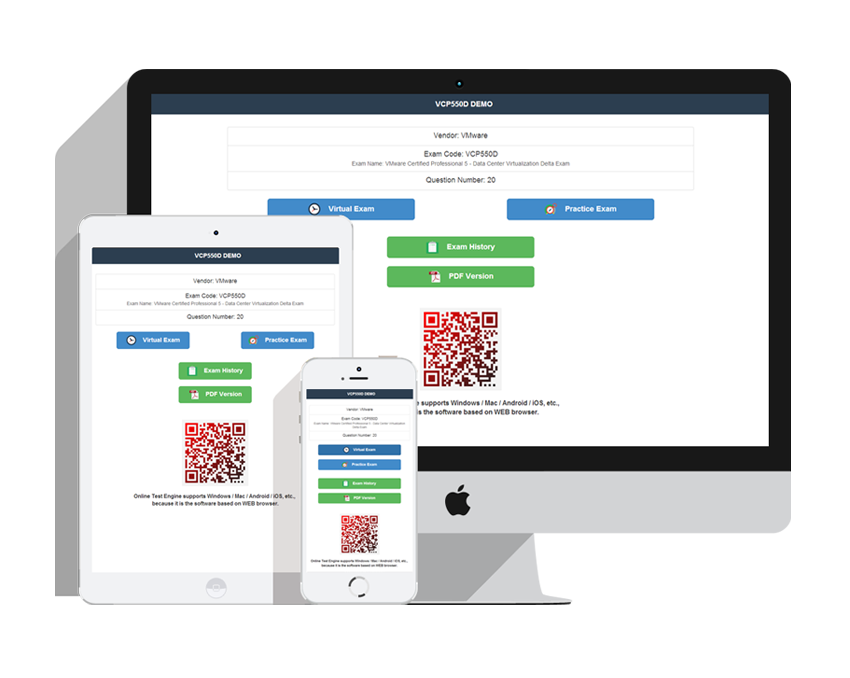
We will provide you preferential terms if you buy a large quantity of our CCA-F dumps VCE. For examples: you can enjoy 39% off if you choose PDF version plus PC Test Engine of CCA-F dumps VCE (a simulation test that you can simulate an examination to check your learning progress). APP (Online Test Engine) is our advanced product which can be used in any mobile devices. The APP version of CCA-F dumps VCE is more convenient for your exam preparation and once it is first downloaded and used, CCA-F latest dumps can be used without Internet next time if you don't clear the cache.
The passing rate keeps stable with 99%
In these years, our pass rate has risen to 99% and always keeps stable as CCA-F pass king. And our experts are still putting their energy to its limits to achieve the perfect outcome of CCA-F latest dumps. There are too numerous successful examples to enumerate and you could see it in the bottom of our website. Maybe you are still afraid that you may fail the exam, we guarantee a full refund if it happens with our CCA-F dumps VCE.
CCA-F exam has never been considered as something easy to pass, the preparing procedures of these exams are complicated and time-consuming, and the enrollment fee is a little high. We are afraid that working hard without any help of CCA-F dumps VCE may be counter-productive. Trough nearly 10 years' development, our company has been the CCA-F pass king in this industry exams. At present, we have formed a group of professional Anthropic engineers and educators who put a great energy into CCA-F dumps VCE. With many years' experiences accumulated , our experts have figured out the whole exam procedures and can accurately predict the questions of Anthropic CCA-F exam that will be listed in the next time .To sum up, you will save a lot of energy and money to pass this CCA-F exam with our dedicated help.

Anthropic CCA-F Exam Syllabus Topics:
| Section | Weight | Objectives |
|---|---|---|
| Topic 1: Agentic Architecture & Orchestration | 27% | - Anthropic Agent SDK usage
|
| Topic 2: Claude Code Configuration & Workflows | 20% | - Configuration files and structure
|
| Topic 3: Prompt Engineering & Structured Output | 20% | - Structured data generation
|
| Topic 4: Context Management & Responsible AI | 15% | - Safety and compliance
|
| Topic 5: Tool Design & MCP Integration | 18% | - Model Context Protocol (MCP)
|
Anthropic Claude Certified Architect Foundations (CCA-F) Sample Questions:
1. A prompt asks Claude to produce Markdown tables. Which addition MOST increases consistency?
A) Remove formatting instructions.
B) Omit examples.
C) Specify exact column names.
D) Increase randomness.
2. Your order management system requires tools for three distinct operations: issuing refunds (requires amount and reason), canceling orders (requires reason), and requesting reshipments (requires shipping address). Each operation shares an order_id parameter but has different additional requirements. You notice during testing that with your current unified tool design, the agent frequently omits required parameters or includes irrelevant ones. What design change will most effectively improve parameter accuracy?
A) Split into three separate tools (issue_refund, cancel_order, request_reshipment), each defining only the parameters required for that specific operation.
B) Keep one unified tool with a nested operation_details object parameter whose internal structure varies by operation type, documented in the tool description.
C) Keep one unified tool with all parameters marked optional, but add detailed few-shot examples in the system prompt showing correct parameter combinations for each operation type.
D) Keep one unified tool but add JSON Schema if-then-else conditionals to enforce that parameters like amount are required only when the operation type is "refund".
3. You are building developer productivity tools using the Claude Agent SDK. The agent helps engineers explore unfamiliar codebases, understand legacy systems, generate boilerplate code, and automate repetitive tasks. It uses the built-in tools (Read, Write, Bash, Grep, Glob) and integrates with Model Context Protocol (MCP) servers.
An engineer used the agent yesterday to analyze a legacy authentication module, identifying two distinct refactoring approaches: extracting a microservice versus refactoring in-place. Today, they want to explore both approaches in depth - having the agent propose specific code changes for each - before deciding which to implement. What's the most effective way to structure this exploration?
A) Use fork_session to create two branches from yesterday's analysis, exploring one approach in each fork.
B) Start two fresh sessions, manually providing a summary of yesterday's analysis findings to establish context.
C) Resume yesterday's session to explore the first approach, then start a new session for the second, manually recreating the original context.
D) Resume yesterday's session and explore both approaches sequentially within the same conversation thread.
4. After investigating a billing dispute over 25+ turns, you've identified that duplicate charges occurred due to a payment gateway timeout triggering retry logic. The required refund ($847) exceeds your $500 authorization limit You need to call escalate_to_human, and the human agent won't have access to your conversation transcript. What context should you pass to enable effective resolution?
A) The complete conversation transcript with all tool results.
B) A structured summary: customer ID, root cause, refund amount, and recommended action.
C) Your diagnosis and the refund amount only.
D) The customer's original complaint verbatim plus the tool result excerpts showing duplicate transactions.
5. You are building a multi-agent research system using the Claude Agent SDK. A coordinator agent delegates to specialized subagents: one searches the web, one analyzes documents, one synthesizes findings, and one generates reports. The system researches topics and produces comprehensive, cited reports.
When analyzing complex legal cases that cite multiple precedents, the document analysis subagent processes each sequentially. A landmark case citing 12 precedents takes over 3 minutes to analyze completely. What's the most effective way to reduce this latency while preserving the coordinator's ability to monitor and debug the system?
A) Enable the document analysis subagent to spawn its own specialized subagents dynamically when it encounters cases with many citations
B) Implement a message queue where precedent analysis tasks are processed asynchronously by a pool of worker agents
C) Create a recursive agent hierarchy where analysis agents subdivide work among child agents until reaching single-precedent granularity
D) Have the coordinator spawn parallel document analysis subagents, each handling a subset of precedents, then aggregate results before synthesis
Solutions:
| Question # 1 Answer: C | Question # 2 Answer: A | Question # 3 Answer: A | Question # 4 Answer: B | Question # 5 Answer: D |


 911 Customer Reviews


