


Preferential terms & extra discount is ready for you if you purchase more
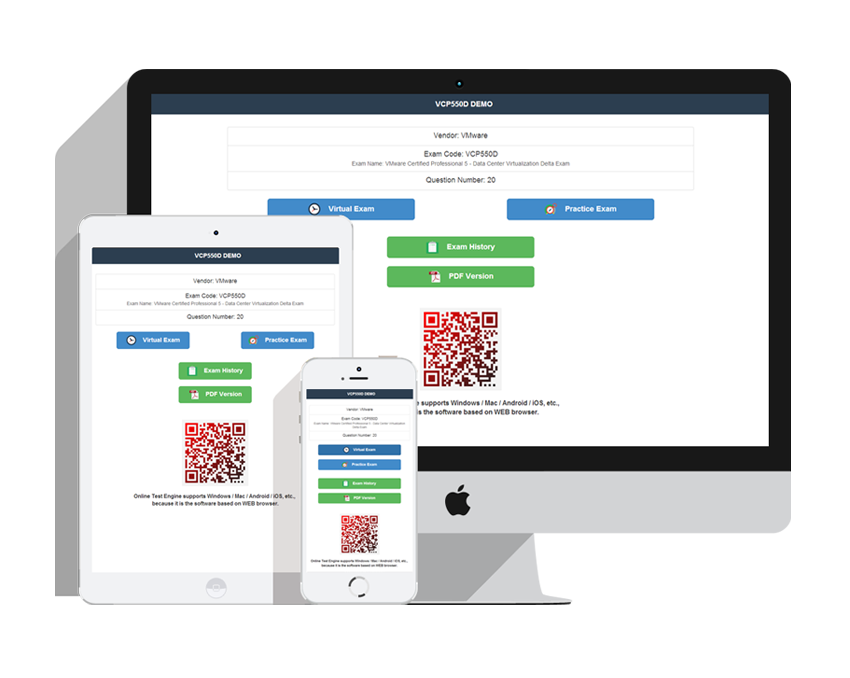
We will provide you preferential terms if you buy a large quantity of our PSM-III dumps VCE. For examples: you can enjoy 39% off if you choose PDF version plus PC Test Engine of PSM-III dumps VCE (a simulation test that you can simulate an examination to check your learning progress). APP (Online Test Engine) is our advanced product which can be used in any mobile devices. The APP version of PSM-III dumps VCE is more convenient for your exam preparation and once it is first downloaded and used, PSM-III latest dumps can be used without Internet next time if you don't clear the cache.
Free demo download trial
We understand that you may still hesitate to buy our PSM-III dumps VCE; even you have realized a variety of advantages of our products. Then another favorable condition of PSM-III dumps VCE that we can provide lies in "free trial", you will find "download for free" in our purchase website for your trial, having some recognition about our products. If Our Scrum PSM-III latest dumps really interests you, we have confidence that we can be good partner.
After purchase, Instant Download: Upon successful payment, Our systems will automatically send the product you have purchased to your mailbox by email. (If not received within 12 hours, please contact us. Note: don't forget to check your spam.)
The passing rate keeps stable with 99%
In these years, our pass rate has risen to 99% and always keeps stable as PSM-III pass king. And our experts are still putting their energy to its limits to achieve the perfect outcome of PSM-III latest dumps. There are too numerous successful examples to enumerate and you could see it in the bottom of our website. Maybe you are still afraid that you may fail the exam, we guarantee a full refund if it happens with our PSM-III dumps VCE.
One-year free updates downloading
As you know, Scrum exam knowledge is updating quickly under the context of rapidly speeding society. After you obtain our PSM-III dumps VCE, we will inform you once there are any changes in case of any inconveniences. And after you finish the exam, we also wish you can continue to learn the newest knowledge. So we provide PSM-III latest dumps freely for one-year and half price for future cooperation after one-year.
PSM-III exam has never been considered as something easy to pass, the preparing procedures of these exams are complicated and time-consuming, and the enrollment fee is a little high. We are afraid that working hard without any help of PSM-III dumps VCE may be counter-productive. Trough nearly 10 years' development, our company has been the PSM-III pass king in this industry exams. At present, we have formed a group of professional Scrum engineers and educators who put a great energy into PSM-III dumps VCE. With many years' experiences accumulated , our experts have figured out the whole exam procedures and can accurately predict the questions of Scrum PSM-III exam that will be listed in the next time .To sum up, you will save a lot of energy and money to pass this PSM-III exam with our dedicated help.

No Useful Free Refund
Our mission is to help our customers to get what they want, excellent PSM-III dumps VCE for example .Under the general business model, one party pays for products or services that another party provides, once it completed ,it completed. But seriously taking our mission as a benchmark as PSM-III pass king, we will provide a refund of the full amount if you fail to pass your examination with our PSM-III dumps VCE. Be careful, you should only provide your examination report for our check.
Scrum PSM-III Exam Syllabus Topics:
| Section | Objectives |
|---|---|
| Leading and Coaching Scrum Teams | - Self-Managing and Cross-Functional Teams
|
| Understanding and Applying the Scrum Framework | - Empiricism and Scrum Values
|
| Value Delivery and Product Focus | - Product Backlog Management and Value Optimization
|
| Organizational Agility and Transformation | - Scrum in Complex and Large-Scale Environments
|
Scrum Professional Scrum Master level III (PSM III) Sample Questions:
Every Sprint has a Sprint Review. What is the purpose and result of this event?
Reveal Solution Discussion 0Correct Answer:
TheSprint Reviewis a formal Scrum Event held at the end of each Sprint toinspect the outcome of the Sprint andadapt the Product Backlogif needed. Its primary purpose is to enable empirical decision-making by involving both theScrum Team and stakeholdersin inspecting the product and determining what to do next.
Purpose of the Sprint Review
The main purpose of the Sprint Review is toinspect the "Done" Product Incrementin the context of overall product progress. During this event:
* The Scrum Team presents the Increment that meets the Definition of Done.
* The Developers explain what was delivered, what was not delivered, and the challenges encountered.
* Stakeholders activelyinspect the product, often by using it, rather than reviewing documents or reports.
This inspection provides real, hands-on feedback and creates a shared understanding of the current state of the product and its direction.
Result of the Sprint Review
The Sprint Review results inheightened transparencyfor all participants. By jointly inspecting the Increment, new insights emerge about customer needs, market conditions, risks, and opportunities. These insights inform conversations aboutwhat is needed next.
Based on this shared understanding:
* TheProduct Owner collaborates with stakeholders and the Scrum Teamto adapt and update the Product Backlog.
* Completed work is accepted or further work is identified.
* New Product Backlog Items may be added, reordered, or refined to reflect the latest understanding of the product.
The Sprint Review does not aim to approve or reject work formally, but to enable learning and adaptation.
Decisions to optimise value and control risk are made based on the perceived state of the artefacts. What events and practises can improve transparency over the artefacts? Explain why.
Reveal Solution Discussion 0Correct Answer:
In Scrum, decisions to optimize value and control risk depend on theperceived state of the artifacts. If artifacts are not transparent, inspection and adaptation become ineffective, leading to poor decisions. Scrum therefore defines specificevents and practicesto improve transparency and support empirical decision- making.
Scrum Events That Improve Artifact Transparency
Sprint Planningimproves transparency by aligning the Scrum Team on the current state of theProduct Backlogand theProduct Increment. The Product Owner explains backlog ordering and objectives, while Developers assess what is feasible based on the current Increment and Definition of Done. This shared understanding reduces risk by creating a realistic Sprint Goal.
Daily Scrumimproves transparency of theSprint Backlog. Developers inspect progress toward the Sprint Goal and make visible emerging risks, dependencies, and impediments. Daily inspection ensures that deviations are discovered early, enabling fast adaptation and reducing delivery risk.
Sprint Reviewimproves transparency of theProduct IncrementandProduct Backlog. Stakeholders directly inspect the Increment and provide feedback. This exposes assumptions, validates value, and informs Product Backlog adaptation, helping optimize future value and reduce market risk.
Sprint Retrospectiveimproves transparency ofprocess-related aspectsthat influence the artifacts. By inspecting ways of working, tools, skills, and the Definition of Done, the team identifies improvements that increase artifact quality and reliability over time.
Practices That Improve Transparency
Aclear and shared Definition of Doneensures transparency of the Product Increment. It creates a common understanding of what "complete" means and prevents hidden work or misleading progress.
Product Backlog refinementimproves transparency by clarifying Product Backlog Items, making assumptions explicit, and reducing uncertainty. Although not a formal Scrum event, refinement supports better inspection and forecasting.
Frequent integration and testingimprove transparency by making the real state of the Increment visible early and often. This reduces the risk of late surprises and unintegrated work.
Visible metrics and information radiators(such as Sprint Goals, Sprint Backlogs, and progress toward objectives) help stakeholders and teams understand the state of work without relying on reports or interpretations.
When many Development Teams are working on a single product, what best describes the definition of
"done?"
Correct Answer:
When many Development Teams are working on a single product, there must beone shared Definition of Done (DoD)that applies toall teamsand tothe entire product Increment.
Single, Shared Definition of Done
Scrum requires that each Increment beusable and potentially releasable. When multiple teams contribute to one product, this means:
* There isone product, not multiple team products,
* There must therefore beone Definition of Donethat ensures consistency, quality, and transparency across all teams.
Having different Definitions of Done per team would result in:
* Inconsistent quality,
* Integration problems,
* Loss of transparency,
* Increments that are "Done" in isolation but not at the product level.
Integrated Increment-Level Definition of Done
The shared Definition of Done must includeintegration criteria, ensuring that:
* Work from all teams is integrated,
* The combined Increment meets quality and compliance standards,
* The product can be inspected and potentially released.
In scaled Scrum (e.g., Nexus), unintegrated work is explicitlynot considered Done, regardless of whether individual teams believe their work is complete.
Ownership and Evolution
While Developers collectively create and adhere to the Definition of Done, it applies at theproduct level, not the team level. As the product and organization mature, the Definition of Done may beexpanded, but it must always remain shared and transparent.
The process of regular inspection and adaptation employs knowledgeable and skilled inspectors. What are two ways in which the Product Owner takes the lead in the inspection process?
Reveal Solution Discussion 0Correct Answer:
TheProduct Ownertakes the lead in inspection by focusing onproduct value and direction, ensuring that learning from evidence directly informs future decisions.
1. Inspecting and Ordering the Product Backlog Based on Evidence
The Product Owner continuouslyinspects the Product Backlogusing information gained from:
* Delivered Increments,
* Stakeholder feedback,
* Market changes and risks.
By ordering and refining the Product Backlog, the Product Owner leads inspection of whether the backlog still reflects themost valuable and relevant work, ensuring that adaptation is based on evidence rather than assumptions.
2. Leading Product Inspection During the Sprint Review
The Product Owner leads inspection during theSprint Reviewby framing the conversation around:
* The Product Goal,
* What value the Increment delivers,
* What has been learned.
By engaging stakeholders in inspecting the Increment and guiding discussions about what to do next, the Product Owner ensures that feedback is transformed intoProduct Backlog adaptation.


 992 Customer Reviews


